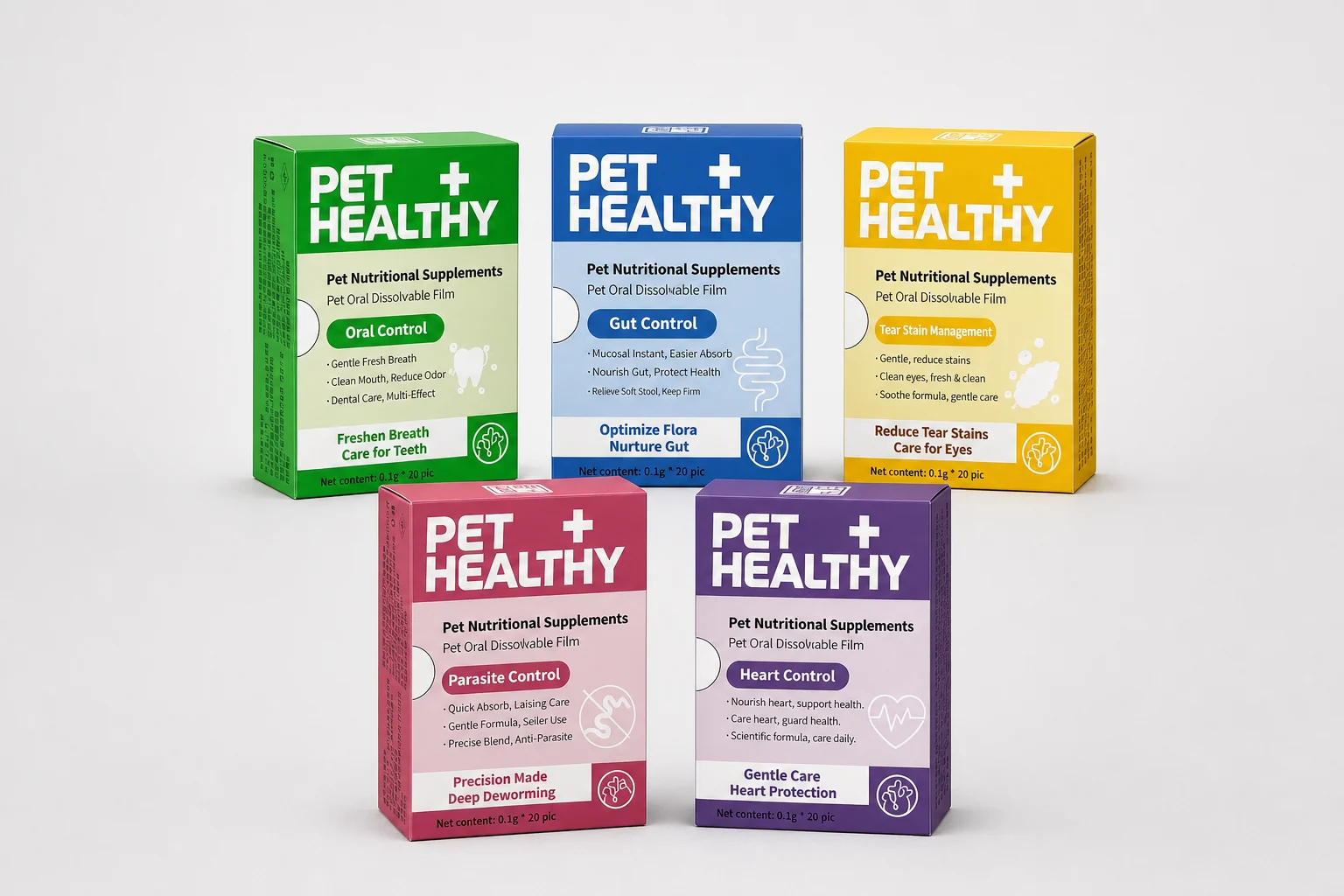
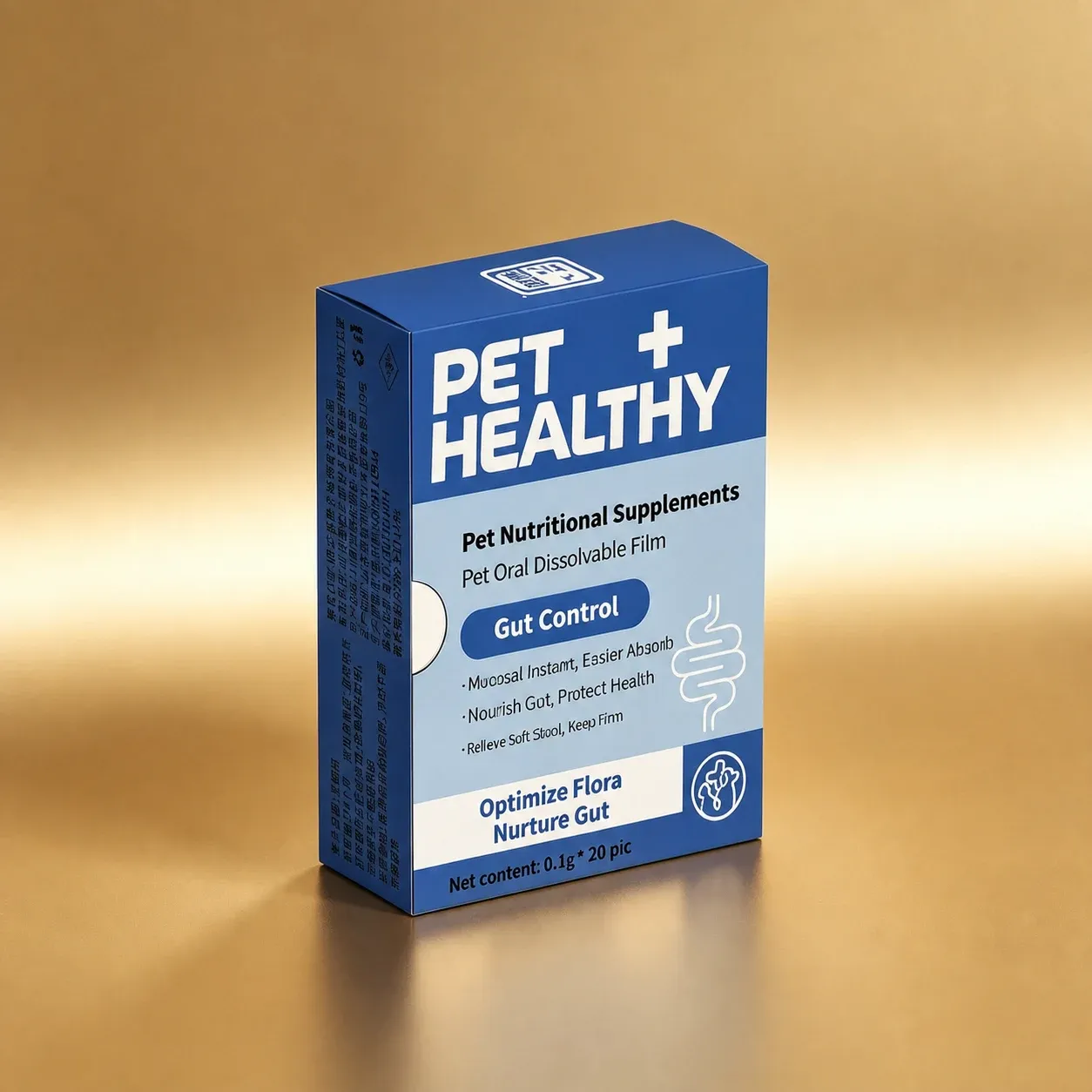
 Blue series · Digestive support range
 Gut Control
The blue range keeps the buyer story focused on digestive support: low-volume feeding, oral mucosa contact, fixed-piece dosing, and retail packaging built around gut-care education.
 CleanPaw Island
ORAL FILM SUPPLEMENT
Pet oral dissolvable film for convenient feeding, fast oral absorption support positioning, and private-label wellness ranges.
Compare the complete range here. Each color identifies one care direction while the thin-film format, fixed-piece planning, retail box system, and OEM discussion stay consistent across the line.
Thin-film format Approx. 2 cm x 3 cm and 0.1 mm reference for low-volume feeding review.
Oral contact route A mucosa-contact support story for buyer education and responsible retail positioning.
Fixed-piece planning Serving count, pet-weight direction, and box quantity can be discussed together.
Private-label system Five function directions share one color-coded retail and export-carton structure.
Blue series · Digestive support range The blue range keeps the buyer story focused on digestive support: low-volume feeding, oral mucosa contact, fixed-piece dosing, and retail packaging built around gut-care education.
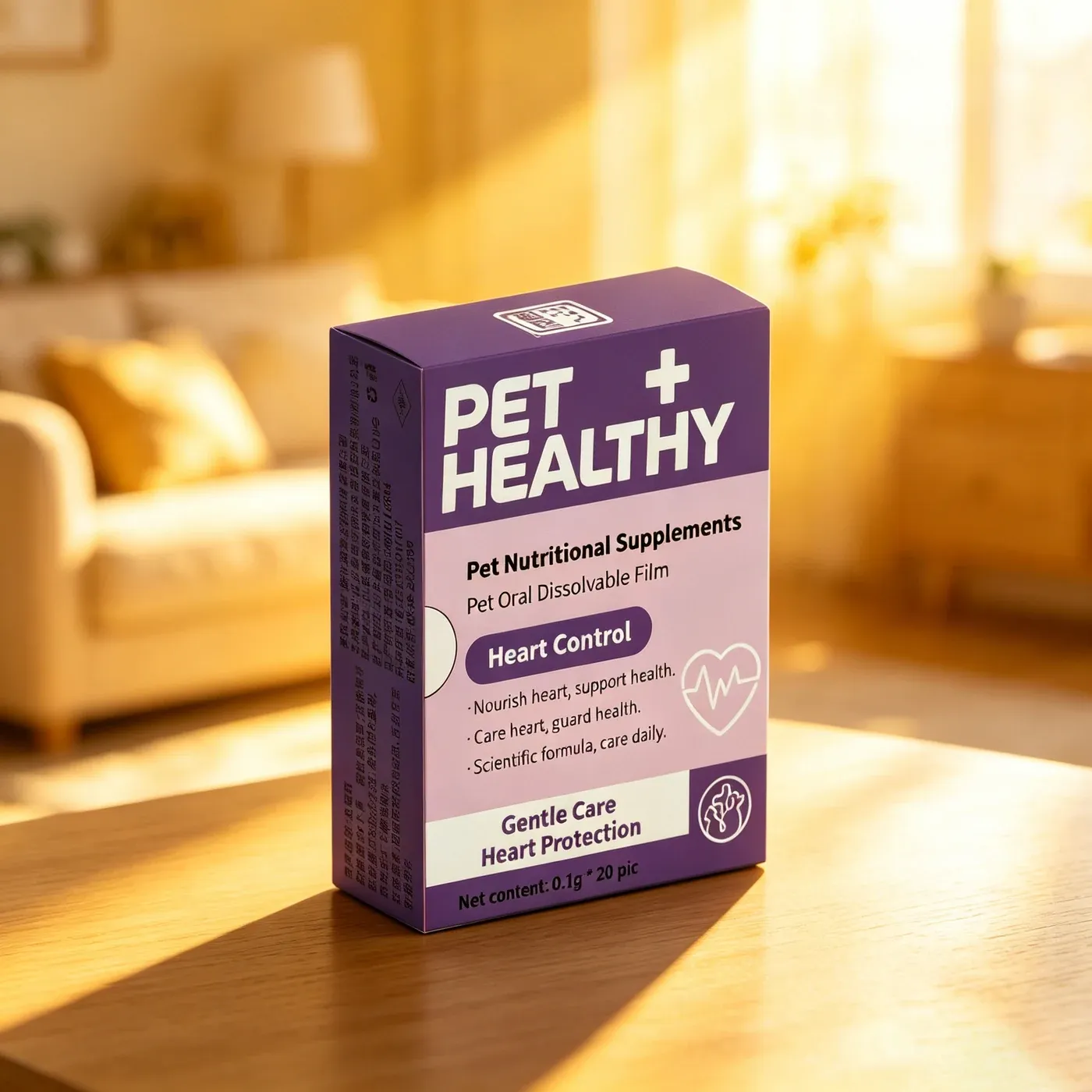 Purple series · Heart support range
 The purple range keeps the buyer story focused on heart support: senior-pet care, daily wellness education, fixed-piece dosing, and premium retail packaging.
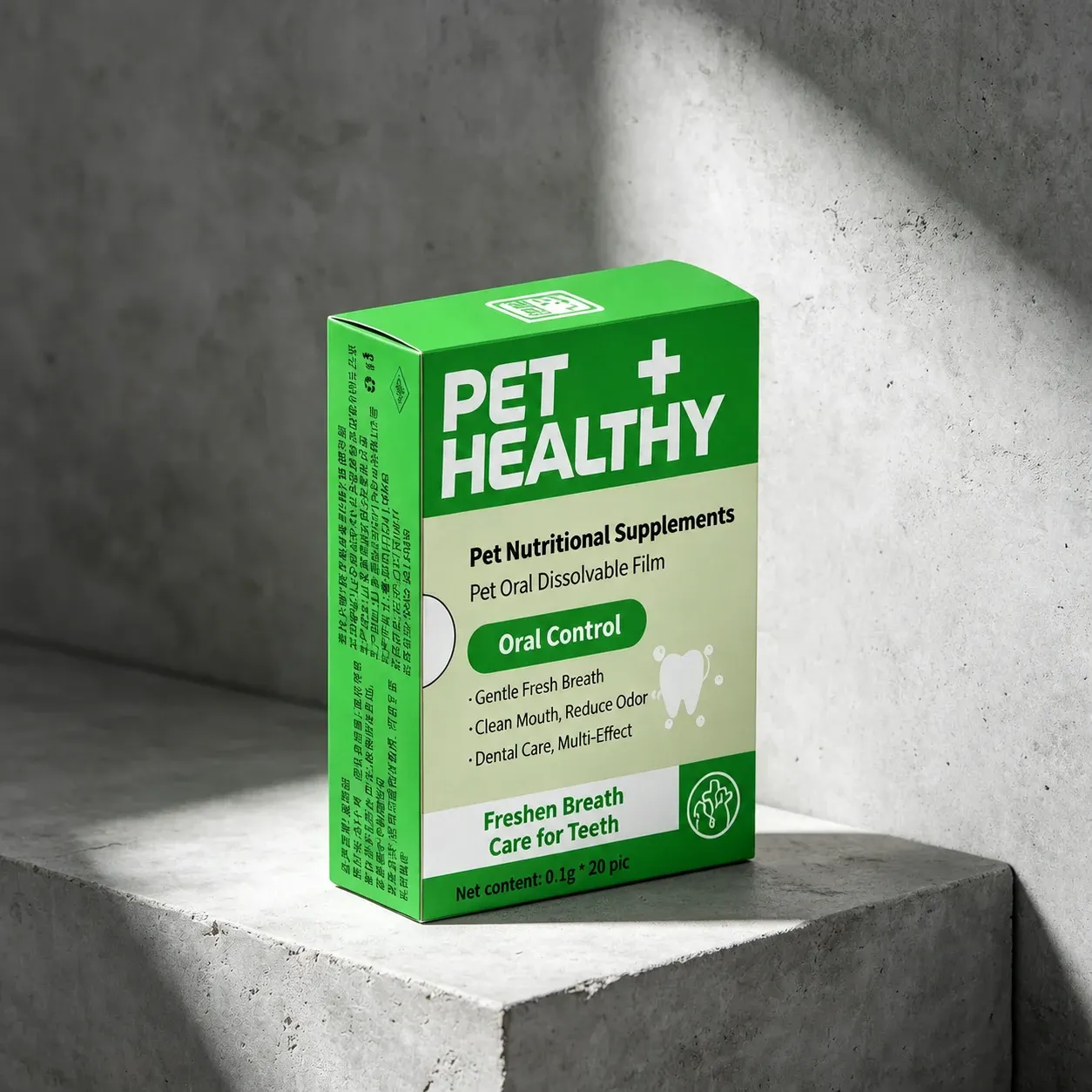 Green series · Fresh breath and mouth-care range
 The green range keeps the buyer story focused on oral care: fresh-breath shelf cues, mouth-cleaning education, fixed-piece dosing, and retail boxes for daily-care routines.
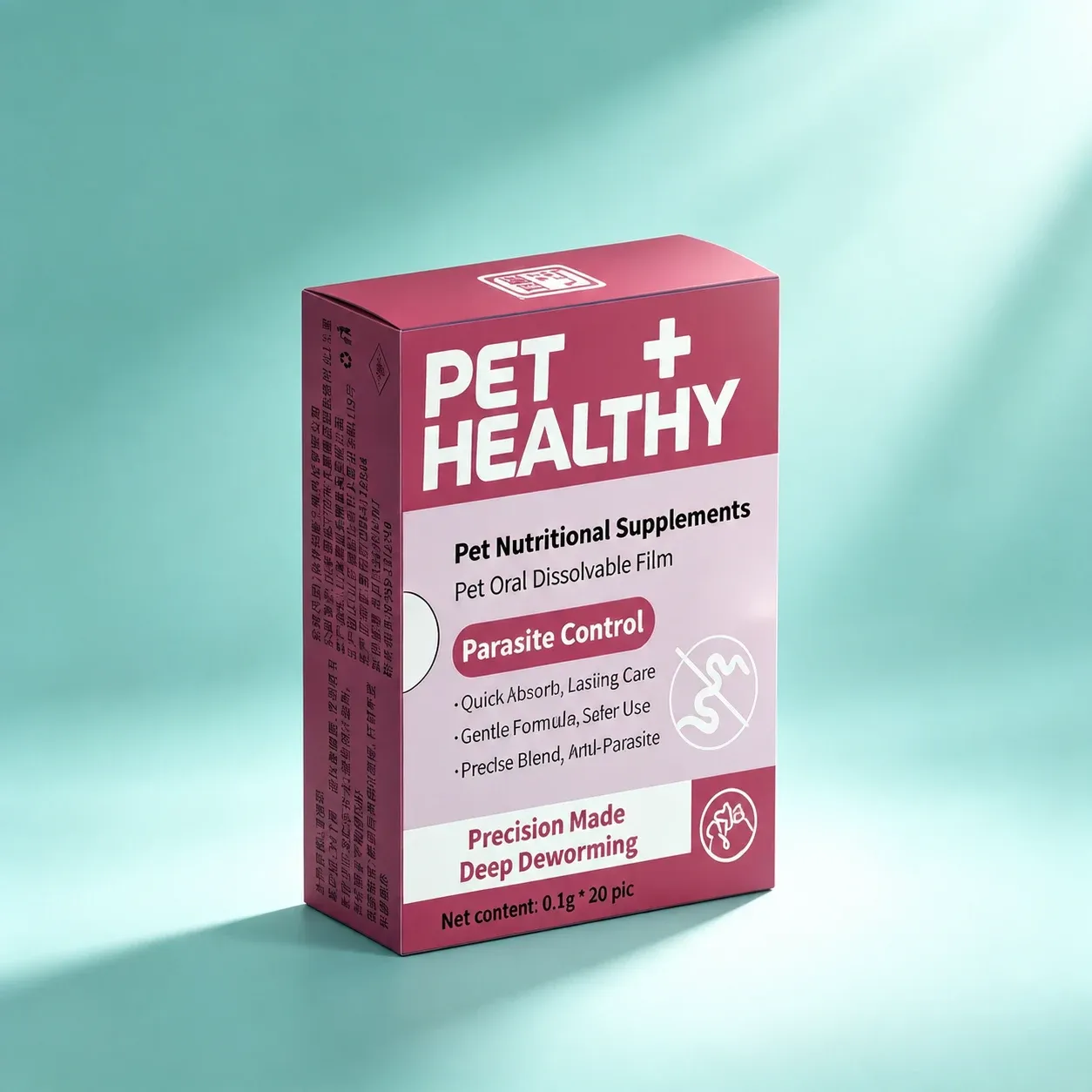 Pink series · Deworming support range
 The pink range keeps the buyer story focused on parasite-control support: targeted care communication, precise manufacturing discussion, fixed-piece dosing, and dedicated retail identity.
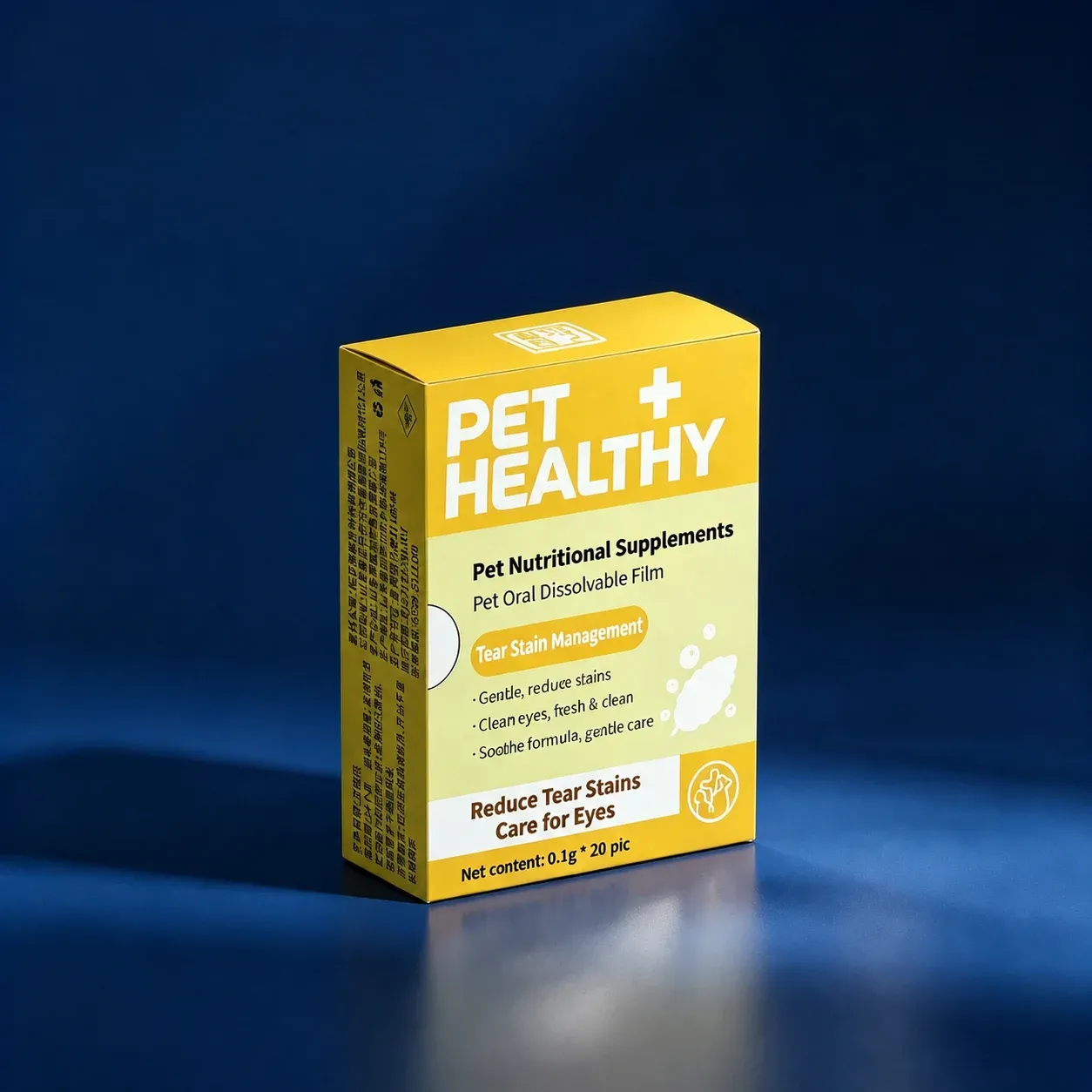 Yellow series · Eye-care and tear-stain range
 The yellow range keeps the buyer story focused on tear-stain care: clean-face retail cues, gentle formula discussion, fixed-piece dosing, and eye-care shelf identity.
Pet supplement buyers face one practical question: how much active ingredient reaches circulation. Eating speed, gastric breakdown, short gut residence, and compensatory overfeeding all affect customer trust.
96.8% bioavailability reference Reference benchmark used in oral film buyer education.
30 min entry window Oral film positioning highlights faster entry into blood circulation than swallowed formats.
2 cm x 3 cm stamp-sized film Small piece direction for low swallowing pressure and sample review.
24 months shelf-life direction Single aluminum-plastic pieces protect from air, moisture, and light.
Swallowed formats
More steps create more buyer questions around release, active stability, dose waste, and feeding acceptance.
Oral film direction
A shorter support route gives the product a clearer education story for premium wellness shelves.
These barriers explain why delivery format matters. They turn pet supplements from ingredient lists into absorption, compliance, and dosing work.
Tablets, capsules, powders, and pastes can be compared through the same lens: route length, active damage, final absorption, and feeding friction. This gives distributors a clear framework for retail customer education.
| Format | Route | Active loss | Final absorption | Feeding friction |
|---|---|---|---|---|
| Tablet | Mouth -> gut -> liver -> blood | 30%-40% | below 10% | Coughing risk and swallowing resistance |
| Capsule | Mouth -> gut -> liver -> blood | 25%-35% | 10%-12% | Capsule shell may stick in the esophagus |
| Powder | Food mix -> gut -> blood | 20%-30% | 15%-18% | Spillage and dose-control friction |
| Paste | Mouth -> gut -> blood | 25%-30% | 12%-15% | Sticky texture, fur mess, and rejection |
Oral film works as a B2B pitch because every visible detail supports the product story: a thin piece, mucosa contact, dispersed actives, fixed serving, and retail box packaging.
Position the product around a shorter support route: oral mucosa to blood circulation, with fewer digestive-path questions.
Approx. 2 cm x 3 cm and 0.1 mm product reference, designed for licking and natural oral contact.
Smaller active particles support stable release, even distribution, and reduced filler reliance.
Each piece can be discussed by pet weight, serving count, retail box, and export carton plan.


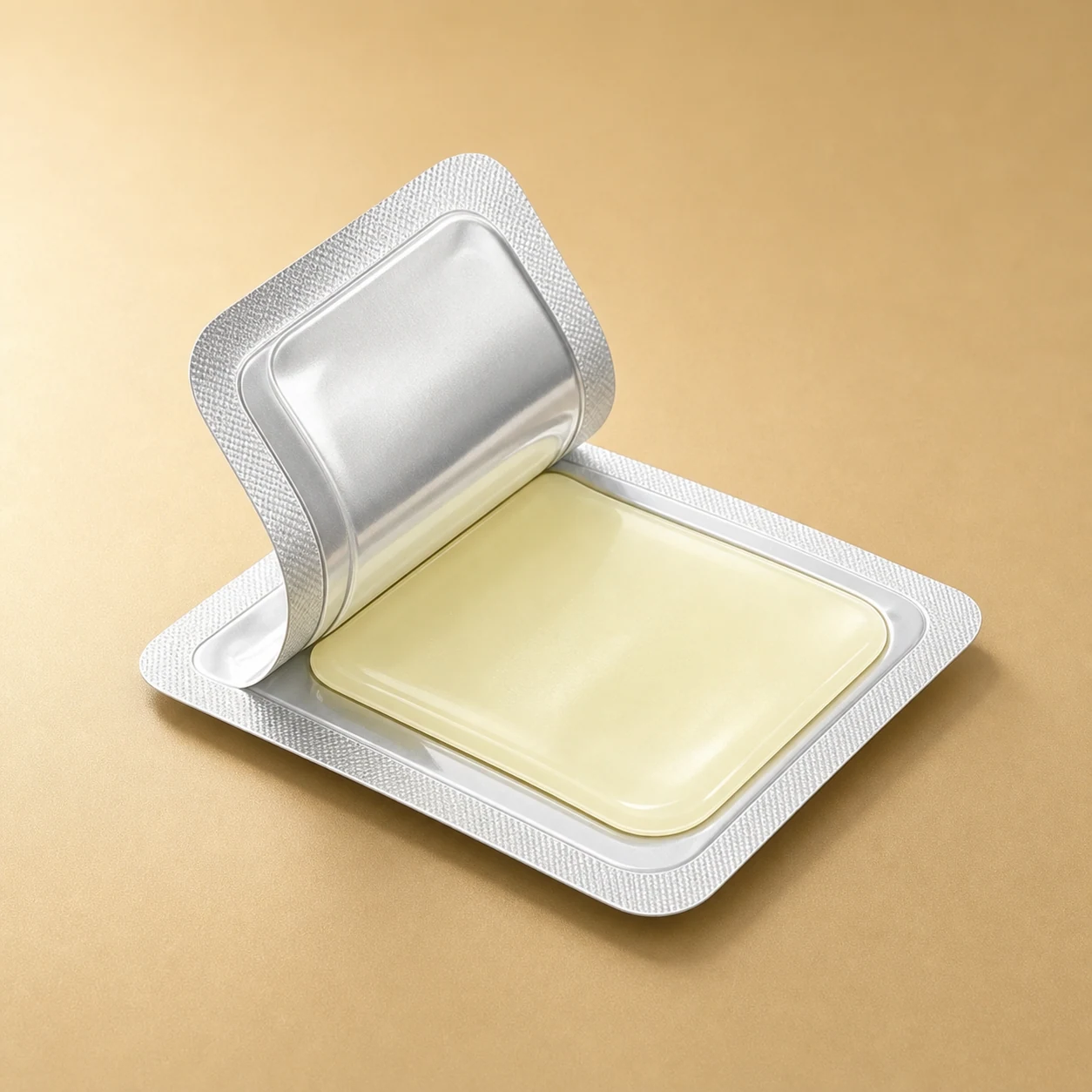
Film reference 2 cm x 3 cm
Thickness 0.1 mm
The visual connects product features with buyer education: low-volume feeding, fixed dosage, and shorter absorption-route positioning.
Weaker digestion, joint support discussion, immune support discussion.
Use a smaller feeding format with less reliance on gut breakdown.Low appetite and weak gut function during recovery support periods.
Discuss low-volume serving and responsible care positioning.Resistance to tablet, capsule taste, shape, or forced swallowing.
Use a soft film format with natural oral contact and flavor sampling.Starch, flavor, color, or filler sensitivity in heavier formats.
Use a concise formula direction and reduce carrier burden.Developing digestion and weak swallowing ability.
Use a thin film direction for lower choking-pressure sample review.Lower activity and calorie accumulation risk.
Use fixed-piece dosing with fewer extra carriers.Private-label retail box with serving count, label copy, inner carton, and export carton planning.