
Product Development
Sourcing Cat Litter for Automatic Litter Boxes
Source cat litter for automatic litter boxes with model-specific checks for granule size, sifting, clumping and sensors before approving a private label claim.
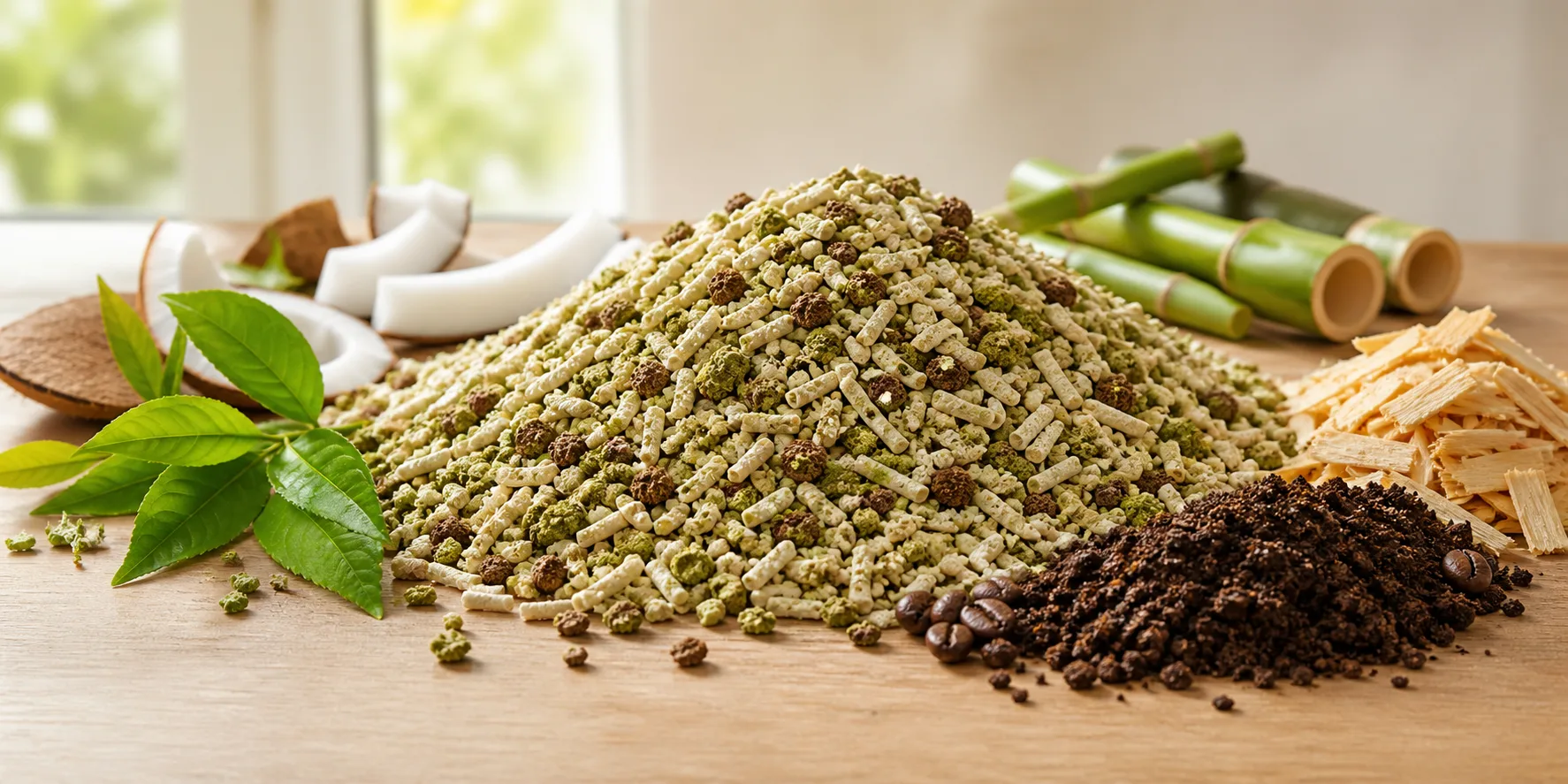
Sourcing cat litter for automatic litter boxes starts with the exact equipment model. A litter that forms a firm clump in an ordinary tray may still fail to pass through a particular screen, leave residue during a cleaning cycle or behave differently around sensors. For private label buyers, compatibility belongs to a defined formula and machine combination.
Check the equipment maker’s instructions first, shortlist permitted litter types, and evaluate the proposed formula in the named model before approving a compatibility claim. There is no single “automatic litter box compatible” specification that covers every machine.
Start with the machine, not the material name
Automatic litter boxes use different cleaning arrangements and have different litter requirements. In its official litter guidance, Whisker explains that Litter-Robot’s sifting system uses clumping litter and identifies materials that do not sift or clump appropriately. It lists some tofu litters as workable while identifying others that do not sift properly. “Tofu” alone is therefore insufficient as a compatibility description.
Another example shows why model names matter: PetSafe’s ScoopFree Crystal Pro guidance specifies ScoopFree Premium Crystal litter and excludes natural and clay litter for that system. A buyer sourcing a plant-based formula should not treat a crystal-specific machine as an intended application.
Build a shortlist of target models before asking for samples. Record the manufacturer’s instructions, permitted litter category and any relevant restrictions for each one. Keep the reference date because support guidance and available models can change.
Translate equipment requirements into a product brief
Granules that pass through the intended screen
Ask for the particle format of the actual sample, including the dimensions relevant to its shape. A nominal pellet diameter tells you little about pellet length or the distribution of larger pieces. Inspect how the proposed litter passes through the target machine’s screen during the permitted cleaning process.
When considering tofu cat litter, compare the offered granule formats against the equipment requirements. Do not infer that reducing one dimension automatically resolves compatibility. Record clean litter carried into the waste area and material left in the wrong compartment as separate observations.
Clumps that suit the cleaning cycle
The machine’s delay and movement are part of the evaluation. Record the permitted settings used, how the wetted area behaves before cleaning, and whether the clump separates from the liner during the cycle. Check for fragments and residue after the cycle as well as successful waste removal.
A hand-scooping demonstration can help screen candidate formulas, but it does not reproduce every machine movement. For cassava cat litter or another plant-based option, assess the specific sample instead of transferring a general clumping claim to an equipment application.
Sensor behaviour and litter appearance
Colour can matter in some machines. Whisker notes that white or translucent litter may affect litter-level and Drawer Full Indicator accuracy in Litter-Robot 4. This is a model-specific consideration, not a reason to classify every light-coloured litter as suitable or unsuitable for all equipment.
Record displayed levels, warnings and drawer indications during the intended use conditions. If the system reports an error, consult the maker’s instructions before continuing. A product claim should reflect the actual supported setup, including the approved formula and relevant equipment settings.
Use a documented evaluation sequence
Begin with a document review to remove combinations excluded by the equipment maker. Then agree a practical evaluation with the people responsible for the machine and product. Follow the maker’s operation and cleaning instructions, and do not alter or bypass sensors to complete a trial.
The following worksheet is a suggested commercial record, not a certification procedure:
| Evaluation area | Record for each combination |
|---|---|
| Equipment | Brand, exact model, relevant version and manual reference |
| Litter | Sample code, formula revision, particle format and colour |
| Setup | Fill level and permitted cleaning settings |
| Cycle observations | Sifting, clean-litter loss, clump removal and residue |
| System observations | Displayed levels, warnings and drawer indications |
| Decision | Suitable for further review, revise the formula or exclude the combination |
Repeat observations so the decision does not rest on one successful cycle. Agree the duration and conditions of any extended trial with the equipment provider. Preserve the sample and records used for approval, and reassess if a later product revision changes the features relevant to the result.
For general comparison preparation, use our cat litter sample testing checklist. It helps keep sample identity and procedures consistent before equipment-specific work begins.
Write a claim that matches the evidence
A generic statement such as “works with all automatic litter boxes” goes beyond a trial on one model. If a claim is justified, identify the supported model or group of models and any material use conditions. Make those details accessible on the product page and packaging instructions.
Keep the evidence with the exact formula revision approved for sale. Treat a change in particle format, colour or blend as a reason to review whether the earlier result still applies. Also separate your own evaluation from manufacturer endorsement; naming the equipment used does not mean its maker has approved your product.
Questions about automatic litter box sourcing
Can tofu litter be used in every self-cleaning litter box?
No. Equipment makers set different requirements, and tofu products vary in particle shape and performance. Some combinations may be acceptable while others cannot sift correctly or are excluded by the machine instructions. Begin with the exact model’s guidance, then assess the proposed formula under the permitted conditions.
Is fine-grain litter always the best choice?
A smaller grain may address one screening issue, but grain size alone does not establish suitability. The approved material category, clumping behaviour, cleaning process and sensor requirements also matter. Specify the product around the target machine and review the complete result rather than selecting on particle size alone.
Discuss a model-specific sample brief
For cat litter intended for automatic litter boxes, a precise brief is the most useful starting point. Contact CleanPaw Island with the target equipment models, manufacturer requirements and proposed retail positioning. We can discuss relevant sample options without assuming compatibility before evaluation.