
Product Development
Mixed Cat Litter: How to Brief a Custom Formula
Develop mixed cat litter with a focused brief for materials, blend ratios, granules and packaging. Plan a distinct private label SKU and a repeatable order.
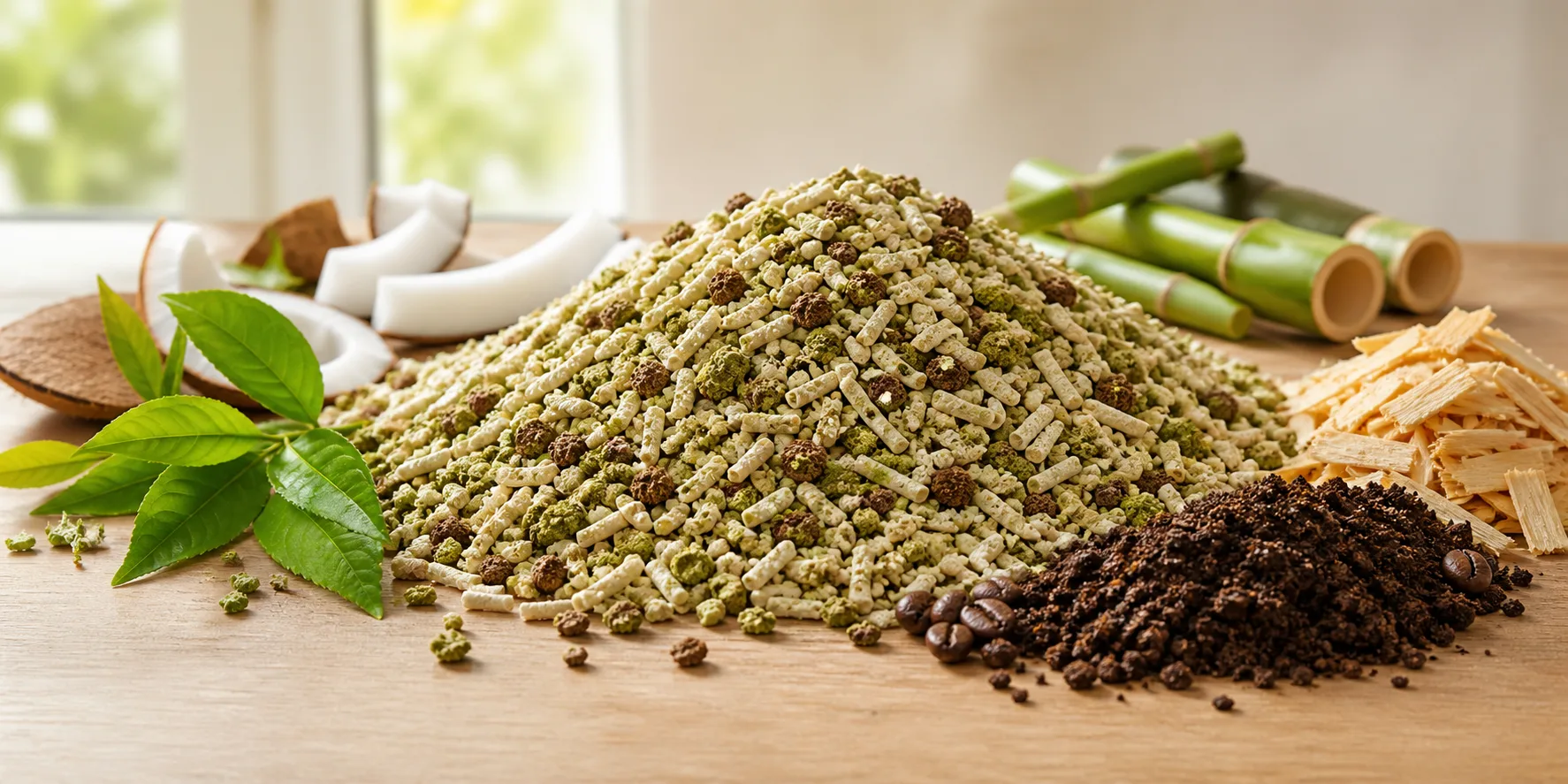
A mixed cat litter custom formula gives a pet brand several connected choices: base material, added ingredients, granule structure, fragrance and appearance. A useful brief turns a customer need into a manageable set of product requirements. Listing ingredients without assigning them a purpose makes the finished SKU harder to evaluate and explain.
Define the intended product, choose the variables worth developing, compare identified samples and record the approved formula with its packaging. This sequence helps a buyer move from a blend concept to a specification that can guide production and repeat orders.
What does mixed cat litter mean for your project?
The term describes a combination of materials or granule formats; it is not a complete recipe. CleanPaw Island’s mixed cat litter range centres on a tofu base with botanical directions such as green tea, coconut shell, bamboo, pine, coffee ground and walnut shell. Availability and the final combination should be confirmed for the project.
Begin by stating which blend direction you mean. If you are replacing an existing product, provide its agreed specification or a reference sample that you are authorised to share. If the concept is new, explain the intended cleaning experience, retail presentation and pack format so the discussion can produce a defined shortlist.
Give every customisation a reason
A blend can be developed around a material identity, a granule texture or a particular appearance. Those choices should work together. For example, a brand may want a visibly distinct botanical SKU while keeping the pack size and naming structure consistent with an existing range. That is a clearer brief than “premium mixed litter”.
Separate the features customers can see from the performance you want to evaluate. A coloured granule may help distinguish variants, but its colour is not evidence of odour control. Likewise, the name of a botanical ingredient does not establish the performance of the complete formula.
| Development decision | Write this in the brief | Check before approval |
|---|---|---|
| Base material | Required base and any exclusions | Formula description matches the sample |
| Added materials | Preferred ingredients and their intended role | Composition is clear enough for product documentation |
| Blend ratio | Whether a ratio is fixed or open to development | Measurement basis and permitted variation are agreed |
| Granule structure | Proposed size and format of each component | Components work together when poured and scooped |
| Fragrance and colour | Desired direction and reference samples | Approved appearance and scent match the named SKU |
| Retail format | Pack size, channel and planned variants | Formula, label and order plan refer to the same product |
Treat blend ratios as specifications
A ratio such as 70:30 is incomplete unless the documents identify the components, the measurement basis and what belongs within each component. A buyer and manufacturer may otherwise use the same numbers while describing different products. Resolve that ambiguity before the formula is approved.
Ask for a limited comparison set with clearly identified differences. Keep the granule structure, fragrance and packaging constant where possible while reviewing a ratio change. Changing everything at once makes it difficult to understand why a sample feels different.
Record the sample version and agreed formulation reference when making a choice. Discuss how commercial confidentiality and the buyer’s documentation needs will be handled during the OEM/ODM process. Do not assume that a custom product automatically includes an exclusive recipe or exclusive sales territory; those are separate terms to agree.
Review the blend through the whole bag
A mixed formula needs an assessment of how its components remain distributed during handling. Compare material from different parts of a filled pack after representative storage and transport handling. Record whether the visible mix remains consistent and whether a change in distribution affects pouring, sifting or the remaining material in the tray.
Check the blend as a finished product. Good results for an individual ingredient do not establish how the combination will behave. The sample testing checklist can help structure observations on clumping, loose particles and finished packaging, with additional notes for blend consistency.
When discussing automatic litter boxes, supply the exact device requirements. Granule format and the behaviour of the complete mixture need review together. A general statement about the base material is not enough to approve a mixed formula for a specific mechanism.
Build a range buyers can understand
If several variants are planned, assign each a straightforward difference: a material direction, a fragrance or a granule format. Keep product names, pack colours and descriptions consistent with that difference. An online listing should make it easy to identify which version is being purchased.
Plan the order quantity for each variant alongside the blend development. A shared base does not mean every variation has the same production or packaging commitment. Ask how separate scents, colours and artworks affect the quotation and reorder plan, then decide which variants belong in the first release.
Use the private-label packaging guide to connect the formula reference to the printed bag, carton markings and shipping unit. This is particularly useful when a distributor handles several similar-looking products in one warehouse.
Custom mixed litter questions
Can we choose our own botanical ingredients?
Preferred ingredients can be included in a development brief. CleanPaw Island lists several botanical directions and reviews other requests with buyers. Ask the team to confirm feasibility, available documentation and the proposed sample plan for your combination. A listed ingredient is a discussion option, not an approval of every possible blend.
Does adding more materials make the litter better?
More components create more variables to manage. Assess whether each addition contributes to the intended product and whether the finished blend meets the agreed requirements. A simpler formula may be easier to describe and control, while a more complex blend needs a clear purpose and a corresponding evaluation plan.
Discuss a mixed cat litter custom formula
Send the CleanPaw Island team a brief covering the intended customer, preferred materials, granule direction, pack format and planned variants. Include any fixed ratio or appearance requirements so the first sample discussion can focus on the decisions that matter to your launch.